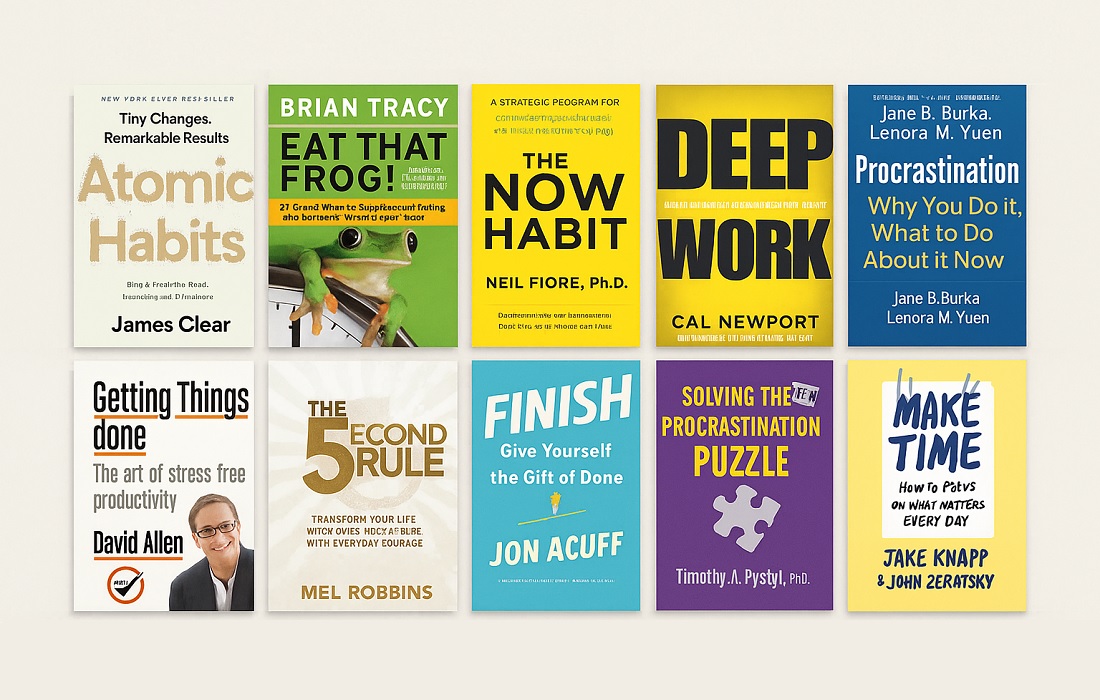
Procrastination isn’t laziness – it’s often a web of fear, perfectionism, and poor time‑management habits. Breaking free requires tools that address both mind and method. This list of Top 10 Books About Overcoming Procrastination blends New York Times and Amazon bestsellers with timeless classics, giving you science‑backed strategies and motivational insights. From behavioral psychology to everyday productivity hacks, these books help identify root causes and build long‑lasting habits. Each comes with an abstract so you can quickly decide your starting point. Whether you’re a chronic deadline‑dancer or a serial task‑avoider, here are the Top 10 Books About Overcoming Procrastination to inspire action and transform how you work.
Top 10 Books About Overcoming Procrastination
1. Atomic Habits by James Clear
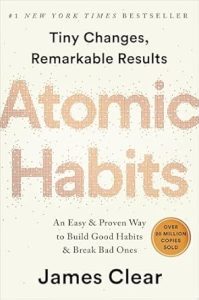
James Clear’s Atomic Habits is a bestselling blueprint for habit change, topping Amazon and NYT charts. He explains how tiny, consistent actions create transformative results, using the four laws of behavior change: make it obvious, attractive, easy, and satisfying. Clear draws on neuroscience, psychology, and case studies to show why systems beat goals and how to sustain momentum through identity‑based habits. For procrastinators, it’s a practical manual: start small, remove friction, and celebrate progress. His writing is concise, jargon‑free, and highly actionable, making it easy to apply strategies immediately. This book is both a motivation spark and a lasting framework.
+ Review of Book Atomic Habits by James Clear
2. Eat That Frog! by Brian Tracy
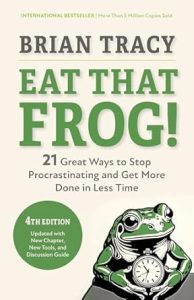
Brian Tracy’s classic tackles procrastination with the metaphor of eating a frog-doing your most difficult task first. Condensed into 21 practical principles, Eat That Frog! focuses on prioritization, goal clarity, and discipline. Tracy emphasizes identifying the high‑value tasks that deliver the biggest results, then attacking them without delay. His techniques range from breaking large projects into smaller steps to using deadlines strategically. Beginners will appreciate the short, punchy chapters and motivational tone, making the content easy to absorb and implement. The frog method builds momentum, disables avoidance patterns, and encourages a decisive, results‑oriented mindset that counters procrastination effectively.
3. The Now Habit by Neil Fiore
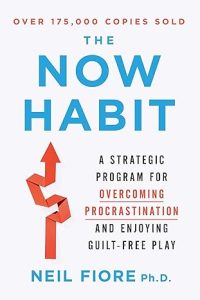
Neil Fiore, a psychologist and productivity coach, reframes procrastination as a learned coping mechanism rather than a character flaw. The Now Habit introduces tools like the “Unschedule” – a calendar method that prioritizes guilt‑free play before work. Fiore addresses fear of failure, perfectionism, and mental resistance by promoting guilt‑free breaks, reverse planning, and positive self‑talk. The book’s compassionate yet firm approach resonates with those feeling trapped in cycles of avoidance. Beginners will find actionable exercises alongside mindset shifts. By combining practical scheduling systems with self‑compassion, this book turns procrastinators into purposeful doers who work smarter, avoid burnout, and reclaim free time.
4. Deep Work by Cal Newport
Cal Newport’s Deep Work champions distraction‑free concentration as the ultimate productivity superpower. He distinguishes “deep work” – cognitively demanding tasks done in focus – from “shallow work” like emails or meetings. Citing research and real‑world examples, Newport shows how cultivating intense focus shortens task time, improves quality, and eliminates procrastination born from distraction. Strategies include time‑blocking, embracing boredom, and practicing commitment rituals. For beginners, his balance of theory and practical tips makes the benefits tangible. While not solely about procrastination, Deep Work arms readers with the habits and environment design needed to start tasks sooner and finish them faster.
+ Book Summary of Deep Work by Cal Newport
5. Procrastination: Why You Do It, What to Do About It Now bu Jane B. Burka & Lenora M. Yuen
This pioneering psychology‑based guide dissects the roots of procrastination, from fear of failure to rebellion against control. Authors Jane B. Burka and Lenora M. Yuen draw on decades of clinical work to explain why willpower alone fails. Their step‑by‑step program targets both emotional triggers and time‑management skills, blending self‑awareness exercises with concrete solutions. Beginners will value its clear structure, relatable examples, and emotional depth. The book treats procrastination as a solvable human behavior, not a moral weakness. It’s ideal for those who want both introspection and specific strategies to break the cycle and build consistent action habits.
6. Getting Things Done by David Allen
David Allen’s Getting Things Done (GTD) is a productivity method designed to capture, clarify, and organize tasks so the mind stays clear and focused. Its five‑step workflow – Capture, Clarify, Organize, Reflect, Engage – helps procrastinators turn overwhelming to‑dos into actionable steps. Allen emphasizes external systems for tracking commitments, reducing the mental clutter that fuels delay. Beginners may find the setup demanding, but once implemented, GTD offers unmatched stress reduction and task completion rates. Its enduring popularity stems from its adaptability: whether using paper lists or digital tools, the method builds reliability, confidence, and momentum in tackling both big and small tasks.
7. The 5 Second Rule by Mel Robbins

In The 5 Second Rule, Mel Robbins offers a simple countermeasure to hesitation: count backwards from five and act before your brain talks you out of it. This disrupts avoidance loops and builds confidence in taking immediate action. Drawing from her own life and audience case studies, Robbins explains how this micro‑decision tool combats fears, overthinking, and procrastination. Beginners will appreciate the no‑nonsense style and real‑life examples that span career, health, and relationships. The rule’s simplicity is its strength – it bypasses lengthy planning, making it a practical quick‑start method for anyone seeking instant momentum against ingrained delay.
8. Finish: Give Yourself the Gift of Done by Jon Acuff
Jon Acuff’s Finish targets the overlooked problem: starting is easy; finishing is rare. Drawing from surveys and personal anecdotes, Acuff identifies perfectionism and unrealistic goals as major procrastination triggers. His solutions include cutting goals in half, embracing imperfection, and planning fun into progress. Beginners will find humor, motivation, and practical steps that protect momentum from self‑sabotage. The book’s message is liberating: done is better than perfect, and completion builds confidence. By reframing goal‑setting and removing emotional roadblocks, Finish turns almost‑there projects into satisfying checkmarks, helping chronic starters finally become consistent finishers in work, creativity, and personal life.
9. Solving the Procrastination Puzzle by Timothy A. Pychyl
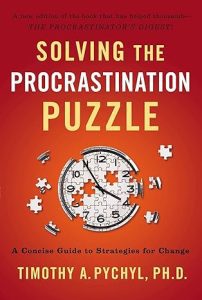
Dr. Timothy Pychyl, a leading procrastination researcher, compresses decades of science into a concise, highly practical guide. Solving the Procrastination Puzzle dismantles myths and presents procrastination as an emotion‑management problem rather than a time issue. With short, focused chapters, Pychyl delivers evidence‑based tactics to manage moods, tolerate discomfort, and act despite inner resistance. His techniques include the “just get started” principle and reframing tasks to emphasize meaning. Beginners will love its brevity and directness – no fluff, just clear actions. This book is a scientifically grounded primer for anyone seeking to trade procrastination habits for productive, value‑driven action.
10. Make Time by Jake Knapp & John Zeratsky
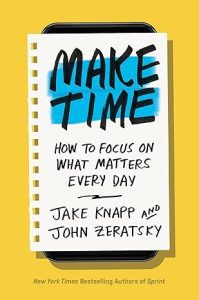
In Make Time, two former Google designers reveal a four‑step daily framework to focus on what matters: Highlight, Laser, Energize, and Reflect. The method combats procrastination by limiting distractions and deliberately choosing priorities. Strategies range from playful tweaks like renaming your Wi‑Fi (“Get Back to Work”) to energy‑boosting lifestyle habits. Beginners will appreciate the practical, mix‑and‑match approach adaptable to any schedule. It’s less about rigid systems and more about sustainable daily wins. By designing time intentionally, Make Time helps you shift from reacting to everything toward creating space for meaningful, proactively chosen work that eliminates avoidance through clarity and focus.
Conclusion: Top 10 Books About Overcoming Procrastination
Overcoming procrastination is about addressing both the mindset and the mechanics of action. These Top 10 Books About Overcoming Procrastination blend motivational psychology, neuroscience, and practical systems, offering powerful strategies for beginners and veterans alike. By starting small (Atomic Habits), tackling the hardest tasks (Eat That Frog!), or reframing your relationship with work (The Now Habit), you can disarm avoidance patterns. Mixing NYT/Amazon bestsellers with enduring classics ensures this list is both fresh and timeless. Pick one, apply even a single tactic, and you’ll begin replacing delay with consistent progress – transforming “I’ll do it later” into “I’m doing it now.”
Engage with Us: What Are Your Favorite Books?